Real productivity: the rule for actually doing what you planned
Whether you’re a college student mapping out your subjects to crush exam week or a professional aiming for that important promotion, there’s a powerful feeling we all want to reach when our head hits the pillow: the undeniable satisfaction of a job well done.
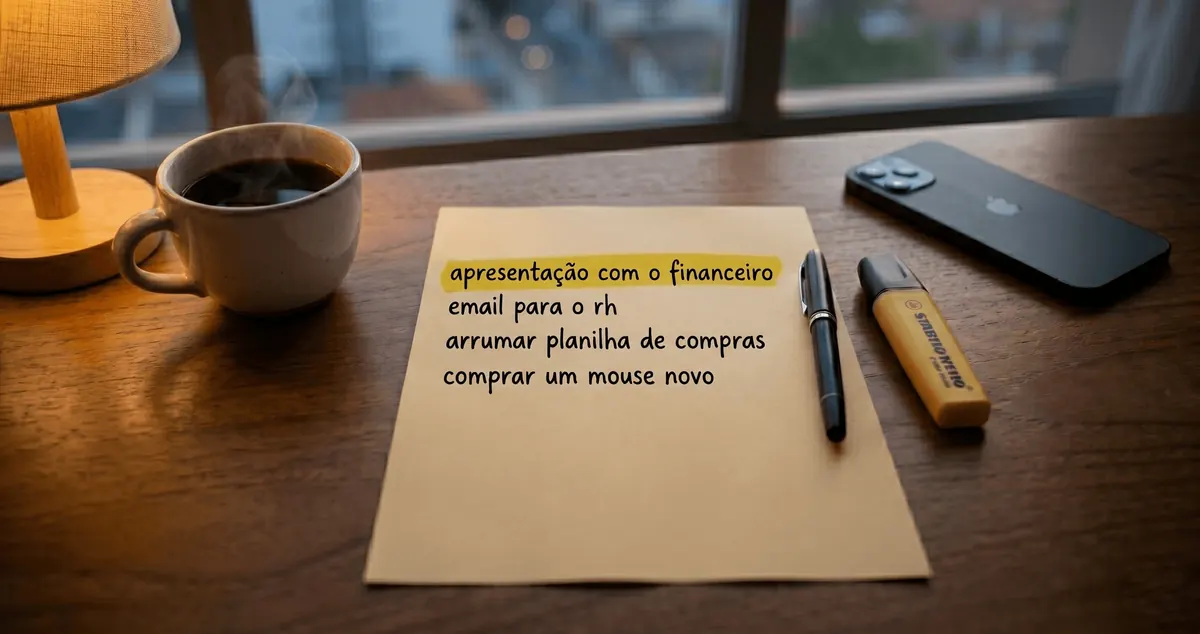
People who plan but don’t follow through usually have a list that’s too long and no clear priority. What works is writing down only that day’s tasks on paper, picking one as your top priority and doing it first. Crossing it off becomes a small reward, and the brain starts wanting to do it again.
To get to that level of execution, it’s common to believe we need the perfect system. We look for planners full of colorful labels, carefully designed notebooks and an endless number of phone apps. It’s the old dilemma of balancing planning and doing.
The big turning point is understanding that the best productivity tool works like an express lane: it simply clears the obstacles out of the way and drops you right into action. Trying to get organized with dozens of open tabs and buzzing notifications is like trying to run with a backpack full of rocks. Real productivity happens when you travel light.
The focus shouldn’t be on how shiny the tool is, but on making sure you have a clear map to do what you planned.
Why does a long list freeze us? The one task rule
When we look at a list with 15 different to-dos, our brain scatters. Faced with too many options, we lose clarity about the next step. To get into a state of flow and really make things happen, the solution is to focus on what truly matters.
That’s where the One Task Rule comes in.
On paper, you’ll write down the real tasks that need to get done on that specific day. No frills. For example:
- Email HR;
- Finish the shopping spreadsheet;
- Put together the slides for the meeting.
From that short list, you’ll pick one as your absolute priority. The criterion is purely objective: choose the one with a non-negotiable deadline, or the one that, once done, will move several other tasks forward. Be practical when you choose it and, most importantly, do it first, before anything else.
How do you get your brain to enjoy following through? The reward ritual
To-do apps tend to pile up whatever didn’t get done, mixing projects from months ago with today’s goals. A loose sheet of paper cuts that pile-up at the root, because its life cycle matches your day exactly.
When you finish your priority, you grab the pen and cross it out hard. The visual and physical impact of that gesture goes far beyond the paper: it’s biological. Every finished task is a win and a relief for the brain.
And then comes the genius of this practical system: it’s disposable.
The day is over. The goal was met. Whatever is left and still important moves to the next day. You crumple up the paper and toss it in the trash. That simple gesture is a victory ritual. It tells your brain: “Today’s plan was carried out. You can rest and celebrate.” The cycle closes cleanly, and tomorrow you start again, with recharged energy and a new daily plan.
Your adjustment point
At the end of the day, the simple act of sitting down and planning clearly is exactly the vehicle we need to reach our bigger goals.
On the emotional side of the journey, treat all of this as training. Every day with your sheet of paper is a new attempt at growing. We should look at our routine not as a burden, but as a big experience of hits, misses and continuous development. It’s precisely this daily practice, of dealing with what we planned and adapting to reality, that lets us experience a truly good life.
The tasks you write down and cross out are just obligations and processes. The paper ends up in the trash. But the clarity, the discipline and the growth you build by doing them… those are yours forever.
To take the list off the paper and into your day, here are three more reads:
- The will to start doesn’t always show up before the task, and here’s why it’s worth rowing anyway.
- When the list doesn’t fit in your head, mistakes pile up. See why you slip more when your head is full.
- The phone always seems to win against the task, and here’s the quick reward trap behind it.
Comments
No comments yet. Why not be the first?