The quick reward trap: why do we put off what matters?

The computer is on, the task is right in front of you, but your phone lights up. “Just a minute,” you think. Half an hour vanishes in the blink of an eye. It happens to everyone.
Our brain plays the survival game. And rule number one of that game is save effort. It loves quick rewards, that good feeling that comes instantly and without sweat. The big challenge starts when life’s real goals, like studying, working out or building a business, demand patience and don’t hand out that instant prize.
Why is your phone so hard to put down? The fast food illusion
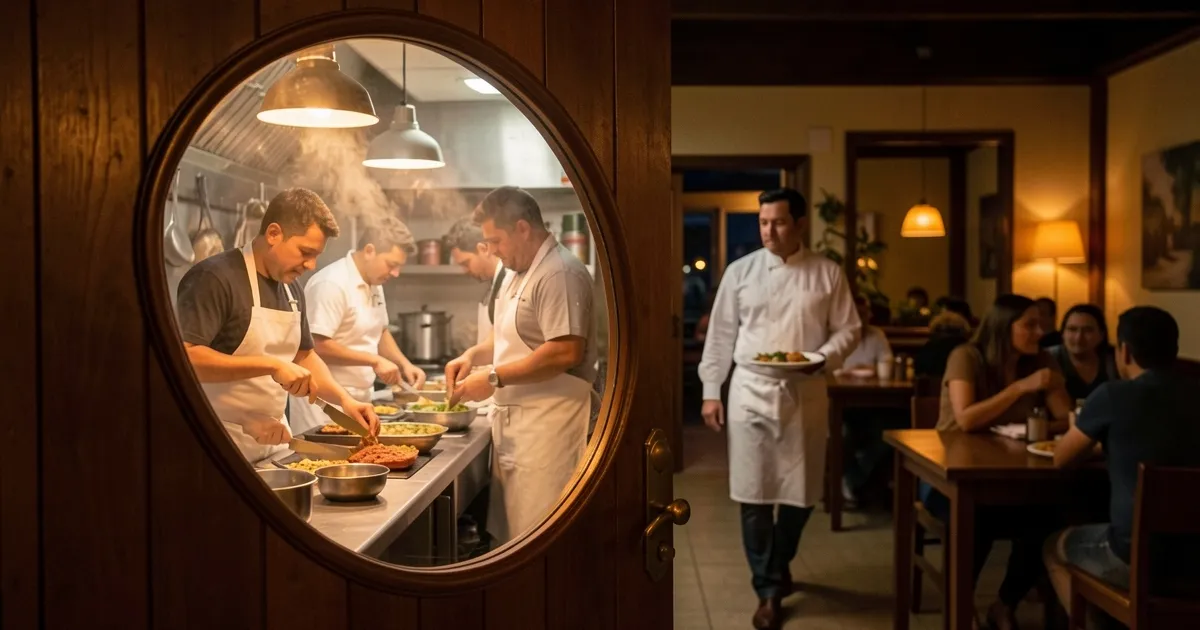
I like to think of it as comparing fast food with a full home-cooked dinner. Scrolling your feed is the fast food. It’s easy, it comes pre-chewed and it delivers pleasure on the spot. But the hunger comes back soon, often with a side of frustration.
Your important project is the full dinner. It means choosing ingredients, getting pans dirty and waiting for the oven. It’s work. But the satisfaction at the end keeps you going much longer.
The philosopher Epictetus summed up this idea well: “No man is free who is not master of himself.” Giving in to instant pleasure all the time means handing control of your own routine over to your impulses.
It’s not laziness, it’s escaping discomfort
For a long time, putting things off was seen as a lack of organization or character. More recent research tells a different story. Psychologists Fuschia Sirois and Timothy Pychyl showed that procrastination works, most of the time, as a way to relieve how bad you feel in the moment. The task brings boredom, insecurity or fear of doing it badly, and opening your phone makes that discomfort go away for a few minutes.1
The relief is real, but it doesn’t last. When the task shows up again, it’s bigger, later and comes with guilt. Then the discomfort grows, which makes you want to escape again. It’s a cycle, and understanding it already takes a weight off your back: you’re not lazy, you’re trying to feel better in the fastest way your brain knows.
A review that brought together hundreds of studies on the subject, by researcher Piers Steel, showed that we procrastinate more precisely when the task’s reward is far away and when the task seems boring or hard.2 The feed wins because it pays right away. The project loses because it only pays later on.
Your phone gets in the way even when it’s quiet
Here’s a detail few people would guess. In an experiment at the University of Texas, people took attention and memory tests with their phone in one of three places: face down on the desk, in their pocket or in another room. Those who left the phone in another room did best, even though the phones in the other groups were off or on silent.3 Just by being nearby, it takes up a little piece of your attention, like a window left open in the background.
And every interruption charges a toll. Studies on interrupted work show that people even make up for it and finish the task in the same amount of time, but they pay with more stress, more pressure and a greater sense of effort.4 That “quick look” usually costs more than it seems.
How do you start the important task? Closing the gap
Trying to beat your brain with willpower alone is an unfair fight. The trick is to outsmart the initial effort.
Break that giant task into pieces so small they seem too easy. Make a five-minute deal with yourself: “I’ll focus only on this and then I’ll stop.” Most of the time, once you chop the first ingredient, momentum carries you to the end of the recipe.
And if you can, put the fast food out of reach. Leaving your phone in another room for those five minutes takes no willpower at all, just a step to the door. It’s much easier not to eat the candy that isn’t on the table than to resist it while staring at the wrapper.
The easy path is always tempting by nature. But the life you want to build is usually right after that piece of work you’ve been avoiding.
Here’s the thought to keep: what discomfort are you trying to avoid when you pick up your phone, and how much bigger will it get if the task keeps waiting?
To swap fast food for a meal that keeps you going, here are three more reads:
- When the glass in your head is full, any drop spills it. See how to empty it before it overflows.
- The will to start rarely shows up first, and here’s why it’s worth rowing anyway.
- Fewer options make it easier to begin, and the one task rule shows you where to start.
Editor’s note: We all have that friend who swears they have no time for their own projects, but somehow knows everything happening on their Instagram feed by heart. Send them this text. It’s a polite way of saying their mental diet is all fast food and it’s high time they went into the kitchen to cook something decent.
Footnotes
-
Sirois, F. & Pychyl, T. (2013). Procrastination and the priority of short-term mood regulation: Consequences for future self. Social and Personality Psychology Compass, 7(2), 115-127. ↩ source
-
Steel, P. (2007). The nature of procrastination: A meta-analytic and theoretical review of quintessential self-regulatory failure. Psychological Bulletin, 133(1), 65-94. ↩ source
-
Ward, A. F., Duke, K., Gneezy, A. & Bos, M. W. (2017). Brain drain: The mere presence of one’s own smartphone reduces available cognitive capacity. Journal of the Association for Consumer Research, 2(2), 140-154. ↩ source
-
Mark, G., Gudith, D. & Klocke, U. (2008). The cost of interrupted work: More speed and stress. Proceedings of the SIGCHI Conference on Human Factors in Computing Systems, 107-110. ↩ source
Comments
No comments yet. Why not be the first?